How Often Should You Really Check Your Blood Pressure? Here’s What Most People Do Not Know
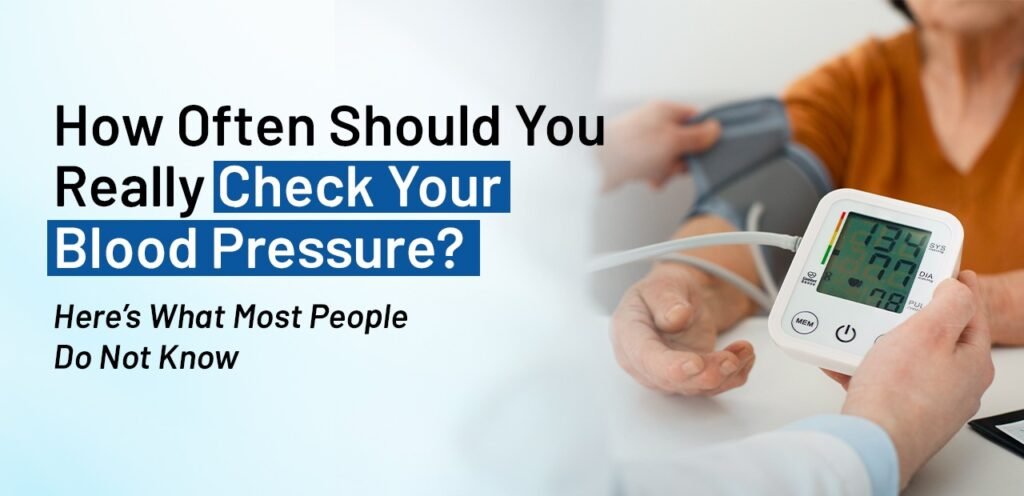
It takes less than 2 minutes, which could save your life. Yet most of us are either checking it too rarely, at the wrong time or not getting what the numbers actually mean. Let’s understand it simply and clearly.
You’ve definitely checked your blood pressure multiple times. The nurse wraps the cuff around your arm, the machine beeps, and a number appears. You get a report, and life moves on.
But the thing is, blood pressure is one of the most important numbers your body produces and surprisingly, most people know little about it. Not because they do not care, but because nobody ever sat down and explained it simply.
That’s exactly what this blog is here to do.
No complicated medical terms. No confusing charts. Just clear, honest, useful information that helps you understand your blood pressure better, and work more effectively with your doctor to keep it in a healthy range.
First Things First – What Is Blood Pressure, Really?
Imagine your blood vessels like a water pipe running through your home. Blood pressure is the force that your blood pushes against the walls of those pipes as your heart pumps it around your body.
Every blood pressure reading gives you 2 numbers:
Systolic (the top number) – This is the pressure when your heart beats and pushes blood out.
Diastolic (the bottom number) – This is the pressure when your heart rests between beats.
A healthy reading of BP is below 120/80 mmHg. Here is a simple breakdown of what the numbers mean:
- Normal: Below 120/80
- Elevated: 120–129 (top number only)
- Stage 1 High Blood Pressure: 130/80 to 139/89
- Stage 2 High Blood Pressure: 140/90 or above
- Emergency Level: 180/120 or above – seek medical help immediately
The reason you should concern over these numbers is simple: when blood pressure stays high for a long time, it silently damages your heart, brain, kidneys, and blood vessels, often without any obvious symptoms, and that is the reason it is called “The Silent Killer”.
But the better part is that it is also one of the most manageable health conditions when caught and monitored properly.
Something Important That Many People Don’t Know About Blood Pressure
Here is the fact that surprises you: your blood pressure is not the same number all day long.
It naturally goes up and down throughout the day depending on what you are doing, how you are feeling and even what time it is. It rises when you are stressed, cold, or active. It drops when you are relaxed or sleeping. This is completely normal.
This is actually one of the most important things you must know, because it means that one single reading, taken at one single moment, only tells part of the story.
This is also why sometimes doctors and cardiologists increasingly encourage patients to monitor their blood pressure at home. A home reading, taken in your own calm environment, gives your healthcare provider a much more complete picture of what your blood pressure is really doing day to day.
Two Conditions Worth Knowing About
White Coat Hypertension
Some people feel a little nervous and anxious at medical appointments that raise their blood pressure. Healthcare professionals are well aware of this; that’s why they often recommend home monitoring to get a more accurate picture alongside clinical readings.
Between 15% and 30% of patients experience this, and home monitoring helps doctors make informed decisions for these patients.
Masked Hypertension
In some cases, a person’s blood pressure is read as normal during a clinic visit but runs higher at other times, such as a stressful workday or after physical exertion. Doctors refer to this as masked hypertension.
Research published by the American Medical Association shows this can lead to higher cardiovascular risk if it goes undetected. Regular monitoring is recommended in this case to identify this pattern early.
How Often Should You Check Your Blood Pressure at Home?
Doctor will give you the most personalized guidance based on your individual health. That said, here are the general recommendations that most healthcare professionals follow:
If you have just been diagnosed or started a new medication: Your doctor will likely ask you to check more frequently, typically three to five times a week, in the morning and sometimes in the evening. This helps how your body is responding and make any necessary adjustments.
If your blood pressure is stable and well-managed: Checking every two to three weeks is generally considered sufficient. Research, including studies published in the journal Hypertension, confirms that consistent readings over time, even if not daily, are highly effective for tracking your cardiovascular health.
If you want to establish your first baseline: Healthcare guidelines from the American Heart Association and the European Society of Hypertension recommend this simple approach: take two readings per day (morning and evening) for seven days in a row. Set aside the first day’s readings, and average the remaining ones. This gives your doctor a reliable starting picture of your blood pressure.
If you feel sudden symptoms: If you experience a sudden severe headache, chest pain, difficulty breathing, or blurred vision, take a reading immediately. If it reads above 180/120, consult your doctor right away.
One thing worth noting: checking your blood pressure too many times a day when you are stable is not necessarily better. Natural fluctuations throughout the day can look alarming even when everything is fine, and this can cause unnecessary stress. Your doctor’s recommended schedule is always the best guide.
Blood Pressure Facts That Often Surprise People
Even people who have been managing their blood pressure for years are sometimes unaware of these well-established facts:
Blood pressure follows your body clock – The BP fluctuate throughout the day as highest in the morning, dips slightly at noon, rises a little again in the evening, and drops to its lowest while you sleep. Doctors call this the circadian rhythm of blood pressure. This is one of the reasons the timing of your reading and medication can matter.
Your blood pressure while you sleep is important too – During healthy sleep, blood pressure naturally drops by around 10 to 20%. People whose BP remain high the whole night face a higher risk of heart disease and stroke, even if their daytime readings seem fine. Recommend consulting with a doctor.
Blood pressure changes with seasons – Multiple studies, including research from the European Society of Hypertension, found that BP tends to be higher in winter and lower in summer. Cold temperatures cause blood vessels to narrow slightly, which raises pressure.
Young people can have high blood pressure too – Hypertension is not just a condition of older age. It is increasing among younger adults and can even affect children and teenagers, especially in the case of obesity, a very salty diet, or a sedentary lifestyle.
The bottom number matters as well. The diastolic reading is sometimes overlooked. Even when the top number is normal, the diastolic can still signal increased cardiovascular risk. The doctor considers both numbers together, not just one.
The Really Encouraging Part – Blood Pressure Responds to What You Do
Here is something genuinely motivating: among all the major risk factors for heart disease, blood pressure is one of the most responsive to lifestyle changes.
Research depicts that the following lifestyle habits can meaningfully lower BP, sometimes within just a few weeks:
Regular physical activity – Even 30 minutes of brisk walking most days of the week can reduce your systolic blood pressure by 5 to 8 points. That is a meaningful, clinically significant change.
Reducing salt intake – Cutting back on processed foods and added salt is one of the most effective dietary steps you can take. The DASH diet (Dietary Approaches to Stop Hypertension), developed and recommended by cardiologists, has strong evidence behind it.
Maintaining a healthy weight – Even modest weight loss can bring measurable improvements in blood pressure.
Limiting alcohol – Drinking above recommended levels raises blood pressure. Cutting back has a direct, relatively quick effect.
Managing stress – Chronic stress keeps your body’s fight-or-flight response activated, which raises BP over time. Simple practices like regular sleep, deep breathing, and physical activity all help regulate this.
Getting quality sleep – Poor sleep and blood pressure are closely connected. Prioritising seven to eight hours of restful sleep supports healthier readings.
None of these changes requires perfection. Small, consistent improvements matter here.
Summary
Blood pressure is not just a number that you check once a year. It is a living, changing measurement that reflects how your heart and blood vessels are doing every single day. The more consistently you examine it, correctly, at the right times, and with the right technique, the more valuable a tool it becomes.
Working with your doctor’s advice and keeping a home monitoring log is one of the simplest, most effective things you can do for your long-term heart health. It takes two minutes. It costs very little. The information it provides to your doctor could make a significant difference in the care you receive.
If you have any questions about your blood pressure readings, the right monitoring schedule for your situation, or what your numbers mean, consulting the doctor or care team at the best hospital in Patna is important. That conversation is always worth having.